Video & subtitles · YouTube Thumbnail Downloader & Metadata Viewer
How a YouTube video ID is extracted from watch, Shorts and embed links
· How it works
youtube urls parsing
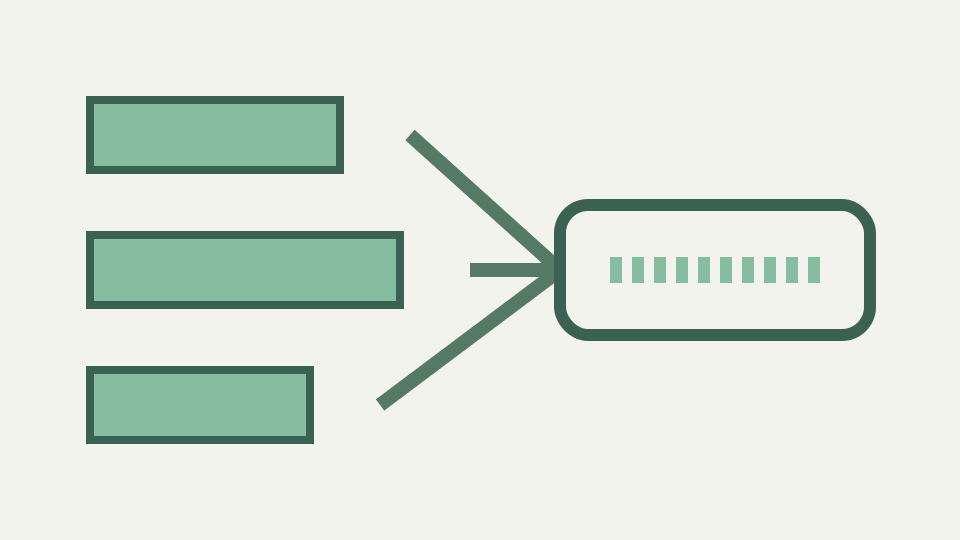
The same video can be linked a dozen ways. This post explains the shapes a YouTube link can take, how a tool finds the eleven-character ID inside each and what to do with tracking parameters and timestamps.
Same video, five different links — watch pages, short links, Shorts, embeds and mobile addresses
One video can arrive as a watch URL, youtu.be share, Shorts path, embed address, live link or mobile-host link. ToolAcre reduces each supported shape to the same eleven-character ID before it considers any network work. A mixed import can consequently use that ID as its deduplication key rather than treating six links to one video as six records.
That ordering is useful for editors cleaning a mixed list: parsing is deterministic string and URL work in the page, so bad domains and playlist-only links can be reported without leaking the pasted value to a remote resolver. A collection URL is left unresolved because neither its presence nor its ordering identifies which member the editor intended to cite.
The ID itself — eleven characters from a 64-symbol alphabet and why it looks random
The accepted ID shape is exactly eleven characters drawn from uppercase and lowercase letters, digits, hyphen and underscore. This is a format check only; passing it does not prove that a video exists or reveal what the characters mean. Applying the rule to the parsed v value or path segment avoids scavenging an ID-like substring from some unrelated encoded parameter.
A bare matching ID is accepted immediately. Longer playlist identifiers use a separate conservative pattern, preventing a playlist token from being silently treated as the key for one video. A start time remains accompanying citation data: changing 30 seconds to 90 seconds still points to the same eleven-character video record.
Parsing with the URL API — reading host, path and query without guessing with regular expressions alone
The URL constructor separates protocol, normalized host, path segments and query parameters. This avoids one giant regular expression that might accidentally accept a lookalike domain or confuse a query value with a path ID. Rejecting a deceptive host is safer than producing a credible thumbnail for an identifier embedded in an untrusted URL.
Only HTTP and HTTPS are accepted, and a leading www is normalized away. The allowlist covers YouTube, mobile, music, gaming, nocookie and youtu.be hosts rather than trusting any hostname containing the word youtube. Remote success cannot validate the provenance of a badly parsed link, because an attacker could deliberately include a real public ID in an unrelated domain.
Where the ID hides in each shape — the v parameter, the path on youtu.be, /shorts/, /embed/ and /live/
Watch pages use the v query parameter, youtu.be uses its first path segment, and shorts, embed and live forms use the segment after their prefix. Legacy /v/ and /e/ paths are also recognized by the same strict shape check. A matching identifier only permits local processing, not a claim about content or ownership.
The parser additionally reads a valid playlist ID and a start offset from t or start. It returns these as separate facts so they can inform generated links without contaminating the video identifier itself. The network boundary begins only after this distinction is complete, so a parser test can run offline.
Ignoring the rest — playlist parameters, start times and share tracking values that do not identify the video
Share tracking values, unrelated query parameters and timestamps do not identify the video. ToolAcre ignores them after extracting the ID, while supported time forms are normalized to whole seconds for links that deliberately preserve a start point. Thus two links with different campaign tags can resolve to one asset record without carrying those marketing parameters into generated URLs.
Playlist-only, channel and search pages receive an actionable refusal because they do not name one video. Guessing an ID from those pages would manufacture certainty and could fetch assets for the wrong record. A curator must select an individual item first; the parser will not quietly choose the first result from a collection whose ordering may later change.
Worked example: normalising ten pasted links to their IDs — including two that are not YouTube links at all
A practical batch of ten pastes can include watch, short, Shorts, embed, live, mobile and bare-ID forms plus two unrelated domains. The first eight converge on IDs; the unrelated hosts fail locally with the accepted-host list. The output can therefore be deduplicated by ID even when contributors copied links from several different YouTube interfaces.
No existence probe occurs during that normalization. A shape-valid but nonexistent ID reaches the later fetch stage, where thumbnail and oEmbed responses supply independent evidence rather than retroactively changing the parser result. This preserves a clean distinction between “the text is a valid identifier” and “Google currently serves public material for it.”
What this does not cover — channel, playlist and search URLs, which contain no single video ID
The parser does not resolve channels, playlists or search results into a chosen video. It also cannot bypass private, deleted or age-restricted access, because extracting a public identifier is not authorization to retrieve protected material. Refusing an ambiguous collection URL protects a catalogue from being populated with whichever item happened to appear first on one person’s screen.
Once Fetch is pressed, image probes may encounter 404, other HTTP errors, a 200 placeholder or undecodable bytes. Metadata separately can fail through transport, HTTP refusal or invalid JSON, including when blockers, proxies or offline state interfere. Those outcomes belong in the availability report; they should not lead the parser to reinterpret the original link as some different video.
Takeaway: find the ID, then everything follows — how the YouTube Thumbnail Downloader accepts a YouTube link and documents which shapes it supports
After local parsing, the browser directly requests one thumbnail per JPEG candidate from i.ytimg.com and one oEmbed JSON record from www.youtube.com. The oEmbed URL wraps the canonical watch URL and format=json. Seeing those calls in the Network panel confirms that normalization has finished and that the same extracted ID is driving both asset and metadata requests.
Those anonymous GETs omit credentials and referrer, use no-store, follow redirects and bypass any ToolAcre server or proxy. Google sees the requests and Origin header; signed-out limits still apply to private, deleted and age-restricted videos. Before the button click, parser behavior can be tested offline with representative URL shapes because no lookup is needed to identify their components.