Documents · Freelance Invoice Tool
E-Invoicing Standards vs a Plain PDF: What Freelancers Should Know
· Background
invoice pdf file-formats
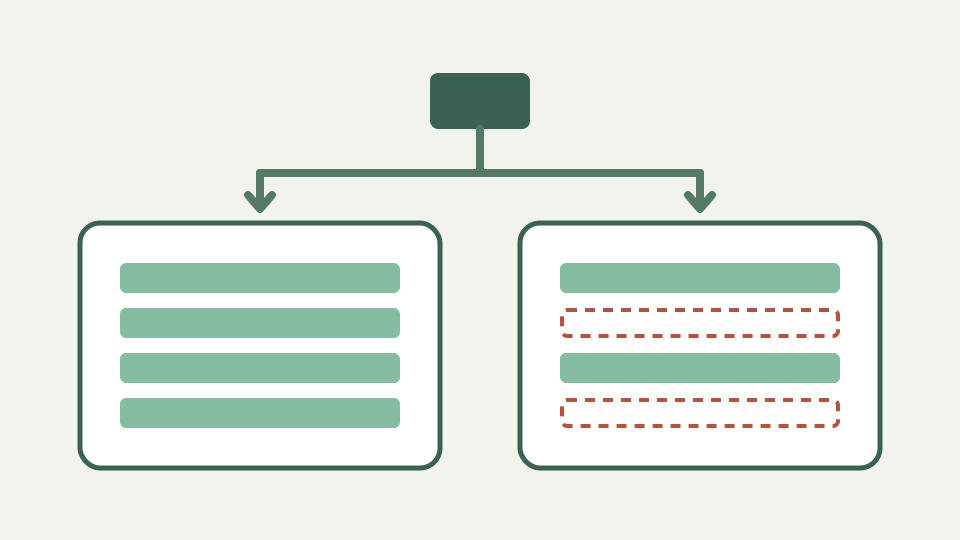
A PDF invoice is a picture of an invoice; an e-invoice is structured data a system can read without a human. This post explains the difference, names the main standards families in outline, and is clear that a PDF export is not one of them.
'We can only accept e-invoices' — the client message that makes a perfectly good PDF suddenly insufficient
A recipient that says it accepts only e-invoices is specifying more than a visual document. A polished PDF can be readable and arithmetically correct while failing that intake channel. Ask for the named network, schema, portal or provider rather than emailing the same PDF again.
Human-readable versus machine-readable — why a PDF's text is layout, not fields a system can trust
This PDF contains positioned text and graphics for a person to read. Text may be extractable, but the app does not mark each value as a trusted invoice field under an external schema. Its JSON export serialises the app’s own document model for save and reload; it is not advertised as an e-invoice.
Structured formats in outline — concepts only, because this repository implements no e-invoice schema
Structured invoicing can involve XML documents, hybrid files or routed networks, but the repository implements and verifies none of those families. Naming particular standards without a cited standard would add unsupported detail. The actionable fact is that no mandatory e-invoicing schema is produced here.
Why mandates exist — reasons require official sources, not assumptions from this tool
The outline attributes government adoption to reporting and fraud reduction, but those policy claims need current official evidence for each programme. The tool manifest provides none. Check the authority’s stated purpose, scope, dates and transaction categories rather than repeating a generic motivation.
Where a PDF fits — wherever the actual recipient confirms it is accepted
A PDF fits when the recipient’s current process accepts a human-readable invoice. The repository cannot establish how many clients or countries do so, and it does not claim “most” small engagements accept one. Obtain acceptance from the client or official channel relevant to this transaction.
What to do when a mandate applies — using the channel your client or authority specifies, with the PDF as the human-readable copy
When a mandate or client rule applies, use the exact channel it specifies and map data with software designed for that schema. A PDF may remain useful as a human-readable copy if the workflow allows it, but it does not become the structured submission merely by travelling beside one.
What this does not cover — which mandates apply to you and when, which depends on your country and your clients
This article does not decide whether a mandate applies, when it begins or which exemptions exist. Those details can depend on seller, buyer, location and transaction. The limitations page expressly rejects clearance, mandatory-format and e-invoicing coverage.
Takeaway — the Freelance Invoice Tool produces a PDF, not a structured e-invoice, and knowing the difference tells you when that is enough
Treat “PDF” and “e-invoice” as different delivery contracts. The Freelance Invoice Tool produces a local PDF and a proprietary JSON save file, not a standard structured invoice. Use it only when the human-readable document is enough for the recipient’s verified process.